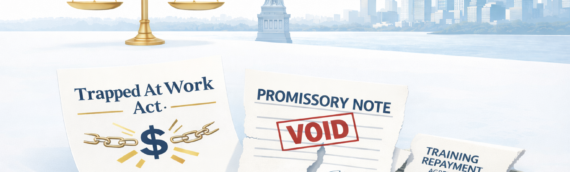
New York has taken a decisive step toward increasing worker mobility and limiting restrictive employment practices with the enactment of the Trapped at Work Act. Signed by Governor Kathy Hochul on December 19, 2025, this legislation effectively curtails the use of stay-or-pay agreements, which are contractual provisions that require workers to repay their employers if they leave their jobs before a specified period. These agreements, often framed as reimbursement for training or onboarding costs, have
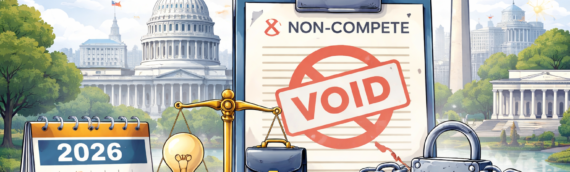
Read More... →If you work in the District of Columbia, your right to move between jobs or start your own business has never been better protected. As of January 1, 2026, new updates to the District’s ban on non-compete agreements have further raised the bar for employers, making it even harder for companies to legally restrict your professional mobility. For the vast majority of D.C. workers, non-compete agreements are now void and unenforceable. This means that if
Read More... →Salespeople in Virginia are in trouble. Due to a recent Virginia Supreme Court decision, sales commissions in Virginia are no longer considered wages under the Virginia Wage Payment Act. The decision is a jolt to any salesperson with a commission plan that falls under Virginia law, as it removes the primary means of full recovery, and it ends substantial employer penalties for withholding earned but unpaid commissions. The decision rips the teeth from the statute
Read More... →A wide-ranging set of California employment laws took effect on January 1, 2026, with additional notice-related requirements rolling out early in the year pursuant to multiple statutory amendments to the California Labor Code and Government Code. The changes affect compensation transparency, equal pay enforcement, certain employment contract provisions, workplace notices, and layoff disclosures. While the laws apply broadly, they are particularly relevant to employees and employers in the technology, startup, and finance sectors, where compensation
Read More... →We are proud to announce that Potomac Legal Group has secured over $6.2 million in recent severance negotiation and employment discrimination settlements for our clients. These results represent successful resolutions in complex employment matters, specifically focusing on retaliatory termination, workplace discrimination, and FMLA violations. Workplace disputes can be financially and emotionally difficult. At Potomac Legal Group, we are committed to fighting for employees to receive fair treatment and the compensation they deserve when their rights
Read More... →The regulatory landscape regarding employee non-compete agreements has undergone a seismic shift in the last quarter of 2025. Following the Federal Trade Commission’s (FTC) decision in September to abandon its appeals of the court rulings that struck down the 2024 Non-Compete Rule, many employers breathed a sigh of relief, assuming the era of federal scrutiny had ended. That assumption would be a mistake. As signaled by the recent actions of the agency under Chairman Andrew
Read More... →The ongoing federal government shutdown has brought the U.S. Equal Employment Opportunity Commission (EEOC) to a near standstill, freezing most investigations, hearings, and mediations. With nearly all staff furloughed, private sector employees may still file discrimination complaints online, but those cases will sit idle until Congress restores funding. The EEOC, which enforces federal laws against workplace discrimination, is now operating with only a handful of employees handling emergencies. That means that potentially tens of thousands
Read More... →Beginning July 1, 2025, a significant change to Virginia employment law will take effect, further strengthening protections for workers across the Commonwealth. Under the newly enacted legislation, Senate Bill 1218, employers will be prohibited from entering into or enforcing non-compete agreements with any employee classified as non-exempt under the federal Fair Labor Standards Act (FLSA), regardless of that employee’s income level. This marks a major expansion of Virginia’s existing non-compete restrictions, which since 2020 have
Read More... →In a significant shift in labor and employment policy, the National Labor Relations Board (NLRB) has rescinded guidance related to its McLaren Macomb decision, a move that could have far-reaching consequences for employees negotiating severance agreements. The rollback, initiated under Trump’s new leadership at the NLRB, weakens previous protections against overly broad confidentiality and non-disparagement clauses – provisions that have long been used by employers to restrict what departing employees can say about their former
Read More... →The Virginia legislature recently passed a consumer protection bill designed to regulate AI decision-making systems and aims to prevent algorithmic bias. Artificial intelligence systems that make employment decisions, which would include recruitment, hiring, performance review, and termination decisions, are included in the bill. The Virginia High-Risk Artificial Intelligence Developer and Deployer Act, H.B. 2094, targets businesses that develop, modify, or deploy high-risk AI within the state. The bill now moves to the governor for signature.
Read More... →